
The Ultimate Jaipur Shopping Guide to Traditional Bazaars & Handicrafts
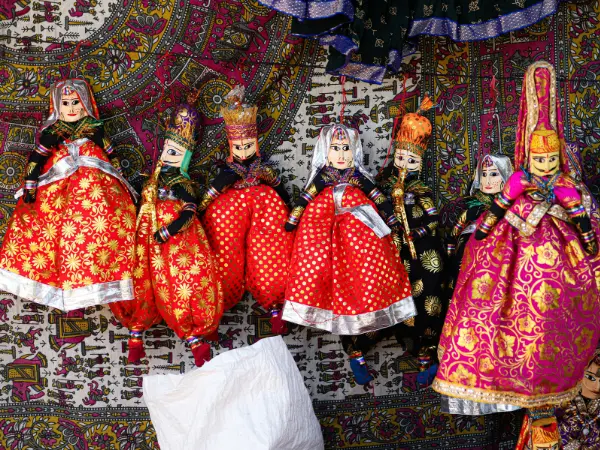
Here at the Savista estate, the passing of time is measured not by clocks, but by the shifting shadows of the Khejri trees and the gentle, evening return of our free-ranging goats to their pens. We believe deeply in the luxury of doing nothing—the search for that elusive stillness that modern life so aggressively tries to steal away. Yet, a truly holistic journey to Rajasthan must also celebrate the vibrant human tapestry of its people. And there is perhaps no better place to feel the brilliant, chaotic heartbeat of our heritage than within the storied walls of Jaipur’s traditional bazaars.
For the mindful traveler, a ‘shopping guide’ offers an opportunity to discover meaningful souvenirs and local craftsmanship. But for those who embrace our philosophy of slow, mindful travel, venturing into the markets of the Pink City is something altogether different. It is an act of communion. When you buy a hand-block printed fabric or a painstakingly crafted piece of blue pottery, you are not merely purchasing an object—you are holding the livelihoods, stories, and generational rhythms of Rajasthani artisans in your hands.
If you feel ready to leave the birdsong of our organic farm for an afternoon to immerse yourself in the living museum of the city’s alleys, here is our mindful guide to Jaipur’s bazaars.
The Weaver’s Song: Bapu & Indira Bazaars
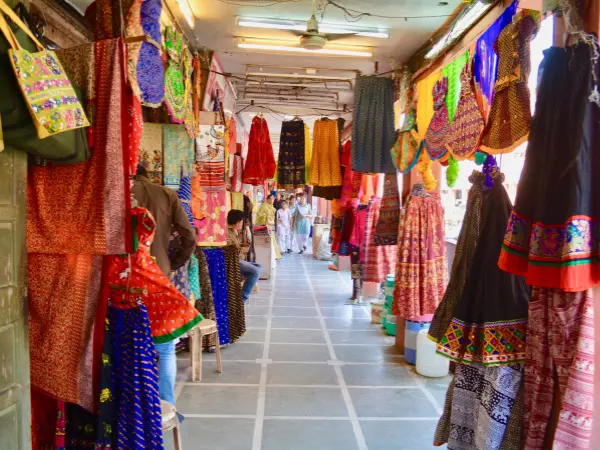
A walk down the pink terracotta avenues of Bapu Bazaar is an assault on the senses—in the most sublime way possible. This is the geographic soul of Jaipur’s famed textile heritage. We always encourage our guests to look beyond the mass-produced piles and seek out the true artistry of Sanganeri and Bagru block prints.
Take a moment to trace the organic imperfections of the motifs—these tiny variations are proof of a human hand carving wood and stamping it rhythmically against cotton, a process untainted by cold, industrial machinery. Here, you will also find the iconic mojaris (traditional camel-leather footwear). Rather than haggling relentlessly over a few rupees, take the time to chat with the shopkeepers over a steaming cup of masala chai. Their families have often inhabited these same shop-fronts for centuries.
Treasures of the Earth: Johari Bazaar
If you trace your steps towards the towering presence of the Hawa Mahal, you will find yourself slipping into Johari Bazaar—the historic jeweler’s quarter. Historically patronized by the Maharajas of yore, the craftsmen here are the keepers of secrets when it comes to Kundan and Meenakari (intricate enamel work on gold and silver).
At Savista, we believe in sustainable, meaningful investments over fleeting consumerism. Instead of accumulating trinkets, sitting down in one of these timeless gaddis (cushioned floor seating) to view uncut diamonds and semi-precious stones is an experience in itself. Watching a master jeweler weigh gems with archaic scales is to witness a trade that has delightfully refused to bend to the sterilized nature of globalized shopping.
The Artisan’s Rhythm: Tripolia Bazaar and Beyond
For an utterly captivating experience, a mindful wander down Tripolia Bazaar offers a front-row seat to the creation of Jaipur’s celebrated Lac bangles. Here, the heat of small coal stoves warms the resin, which craftsmen and craftswomen swiftly stretch and shape onto wooden rollers, studding them with tiny mirrors and stones before they cool. It is raw, immediate, and utterly magical.
If your tastes lean towards the home, seek out the enclaves dedicated to Jaipur’s iconic Blue Pottery. Made not from clay but from a distinctive dough of quartz stone powder, powdered glass, and Multani Mitti (fuller’s earth), the glazed vases and tiles are hand-painted with flora and fauna motifs that effortlessly echo the botanical beauty of our own estate.
The Art of Mindful Wandering (Practical Notes)
Navigating these markets can be overwhelming for the uninitiated, so we always equip our departing friends with a few quiet philosophies for the day:
- Pacing: The bazaars usually stir to life around 11:00 AM and remain bustling until 8:00 PM. We recommend heading in after a lazy breakfast at the estate, taking the afternoon slowly, and pausing often.
- Engagement Over Acquisition: Don’t be afraid to walk down the narrowest alleys (galis) that branch off the main avenues. This is often where the actual workshops are nestled. A polite smile is generally all it takes to be welcomed in to watch an artisan at work.
- Mindful Transport: Let our staff arrange a reliable car or a trusted tuk-tuk for your journey into the walled city, ensuring that your transition from our serene sanctuary to the lively hub is as effortless as possible.
Returning to the Sanctuary
There is a particular kind of joy in returning to Savista as dusk falls, leaving the clamor of the city behind. After bathing off the dust of the day, our guests often spread their newly acquired textiles or silver earrings out on their large, unhurried beds—running their hands over the textures and reflecting on the human connection bound into each thread and stone.
To end the day with a simple farm-to-table supper under our star-canopied courtyard, wearing a freshly purchased cotton kurta that still carries the faint, sweet smell of the bazaar—this, to us, is the essence of experiencing Jaipur. Not as a checklist of transactions, but as a deep, resonant chapter in your travel diary.