
Hands in Clay: Learning the Ancient Art of Terracotta Pottery from Village Masters
Water hits sun-baked soil and you smell it immediately. Indians call it mitti ki khushboo. The perfume of the first rain.
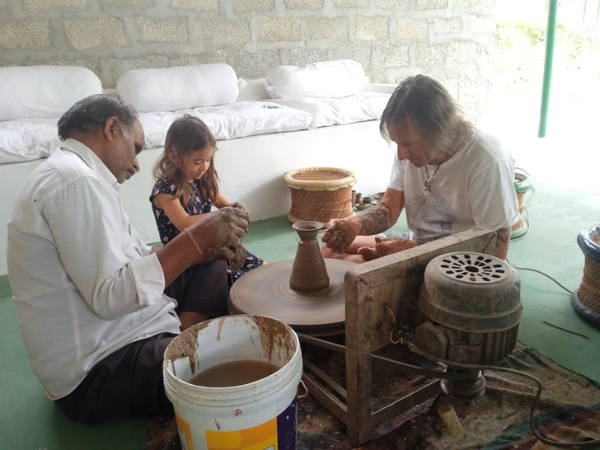
You will catch that scent before you even see the potter’s workspace in Sanjharia village—just outside the boundary of Savista Retreat. A man sits under a massive peepal tree. He has a wooden stool. A pile of dark clay. A heavy stone flywheel. His family has worked the earth in this exact spot for generations.
He doesn’t give you a sales pitch. He just points at the wheel. “Aao, baitho.” Sit down.
Much of our daily life now unfolds through digital screens. Touching wet, cold clay shocks the nervous system awake.
This is an authentic village experience, shaped by traditional craftsmanship and the natural rhythms of rural life. You are surrendering to actual village rhythm.
An Unbroken Thread: The Legacy of the Kumhar
Pottery predates the palaces here. Indus Valley artisans spun vessels for grain and water millennia ago.
In rural Rajasthan, the Kumhar (potter) still holds the community together.
- Slender-necked matkas chill drinking water under the brutal desert sun without a single drop of electricity.
- Porous kullhads for morning chai.
- Tiny oil lamps (diyas) light up the courtyards during festivals; a practice that hasn’t changed in centuries.
At Savista, you become part of a centuries-old craft tradition, sitting alongside a master artisan and discovering techniques passed down through generations. You sit next to a master; you absorb techniques stored in ancestral muscle memory.
Sitting at the Chaak: What Actually Happens
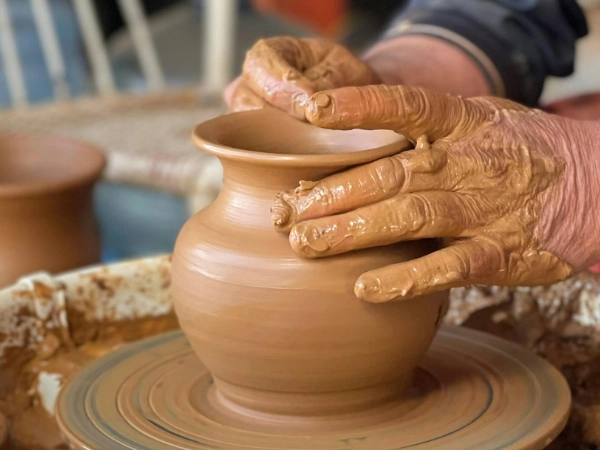
The master spins the stone wheel with a notched bamboo stick. Physics takes over. Inertia keeps it moving silently on a single pivot.
1. Centering
He drops local clay onto the stone. Guides your wet hands over it. First lesson: centering. A steady mound is the foundation of a well-shaped vessel. You brace your elbows against your knees; breathe. Apply quiet pressure until the earth glides under your palms.
2. Opening the Vessel
Push your thumbs into the spinning center. A hollow forms. Cup your fingers on the walls and pull upward. The form reacts instantly.
- Push outward for a belly.
- Collar your hands inwards to form a narrow neck.
- Flare the lip. Just like that, you have shaped an authentic Rajasthani kullhad.
3. The Thread and the Sun
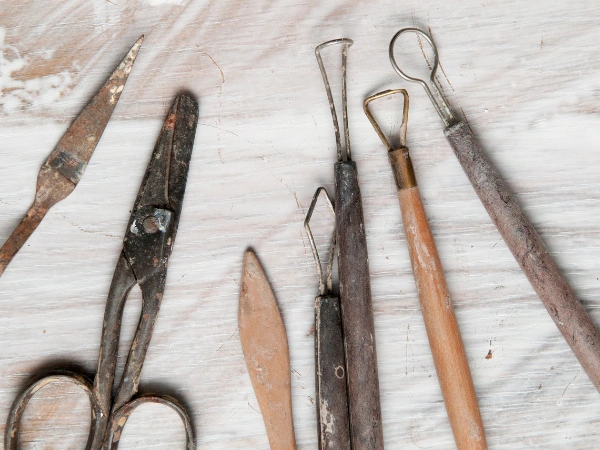
The master slides a cotton thread under the base. It cuts the clay free. You lift it carefully—set it on a wooden plank to bake in the Rajasthani sun.
The Meditative Antidote to Modern Clutter
People think this will be a quick ten-minute photo op. They end up completely absorbed in absolute silence for two hours.
Pottery forces presence. Start drafting an email in your head while centering clay? The wall collapses. Working the wheel grounds your nervous system.
Then there is the lesson of impermanence.
When a piece fails on the wheel, the artisan doesn’t get frustrated. He scrapes it off, tosses it back into the water bucket, and kneads it. Nothing is wasted. The earth returns to the source.
A Souvenir with Soul
You’ll take home more than memories; you’ll carry the joy of working with clay and creating something by hand.
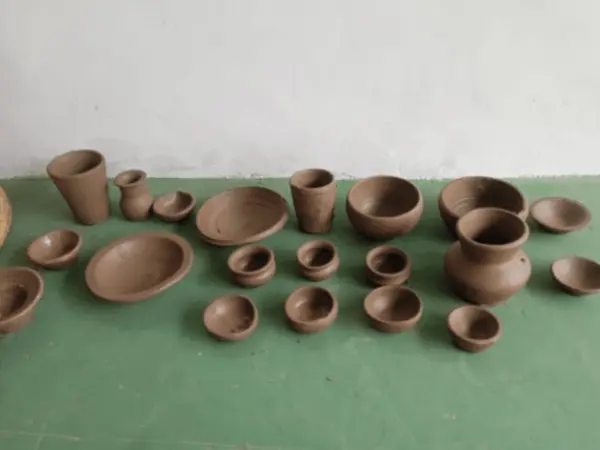
More importantly, you made a physical object. Your bowl will then be carefully fired using the village’s traditional pit-firing technique, transforming it into a beautiful terracotta keepsake. Then you pack it in your suitcase. Months from now, sitting in a sterile kitchen thousands of miles away, that modest terracotta vessel proves you actually spent an unhurried morning with the masters of Sanjharia.
Create with Us at Savista
We arrange artisan workshops for our staying guests. Solo travelers, couples, or people with young kids. We keep the experience intimate and respectful of local tradition.