
Jal Mahal Jaipur: A Visitor’s Guide to the Sunken Water Palace
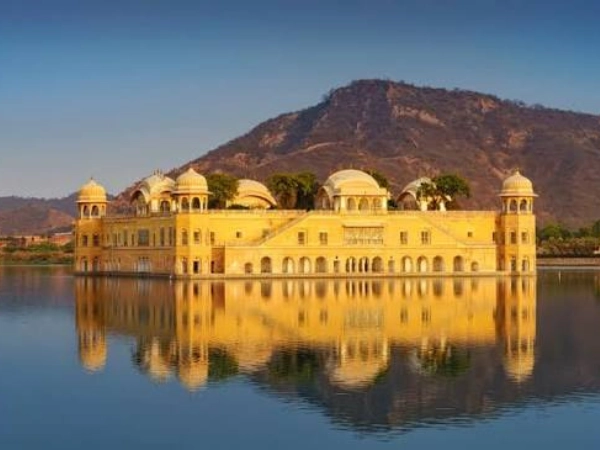
Jaipur is chaos. Traffic; dust; towering stone forts. As you travel towards Amer, the surroundings gradually open up to reveal a beautiful change of scenery. You are looking at the Jal Mahal.
The Water Palace stands gracefully at the heart of Man Sagar Lake. It looks like a sandstone mirage floating on the surface. Its elegant architecture blends beautifully with the surrounding lake and landscape. Just quiet architecture backed by the Aravalli mountains. If you want to understand how Rajput royalty actually relaxed, you start here.
The Illusion of the Sunken Palace
Stand on the shoreline and you see a single-story pavilion. It features elegant chhatris (domes) on the roof.
But there is a fascinating architectural secret beneath the surface. The Jal Mahal is actually five stories tall. When monsoon rains fill the lake, the bottom four floors vanish completely underwater. It has sat submerged for centuries. Rajput builders used a specific lime mortar; it seals the stone so well that the submerged carvings remain perfectly intact today.
A Royal Retreat for Duck Hunting
Amber Fort was built for war. Jal Mahal was built for a party.
Maharaja Madho Singh I commissioned it in 1750 as a hunting lodge. Kings didn’t sleep here. They brought their entourages to Man Sagar Lake—a natural magnet for migratory birds—and hosted massive duck-hunting excursions. Maharaja Jai Singh II eventually expanded the structure. It became the default summer picnic spot because the lake cooled the breezes before they hit the open corridors.
An Ecological Revival
The lake almost died. By the late 1990s, improving Man Sagar Lake’s water quality had become an important priority for revitalizing its ecosystem and protecting the palace’s historic structure.
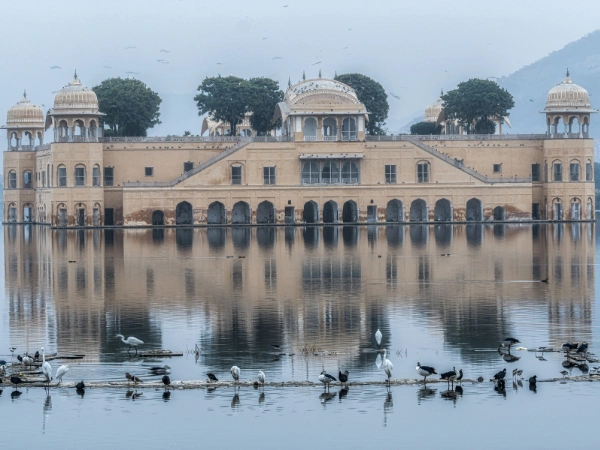
Then came the restoration. In the early 2000s, conservationists dredged and purified the water. They rebuilt the palace walls using original materials. Today, the wetlands are alive again. You will spot flamingos. Great crested grebes and cormorants. It works.
Planning Your Visit: Viewing the Palace
You can’t treat this like a standard monument visit. Access is restricted.
- Going Inside: You can’t. The government halted boat rides to protect the preservation work.
- When to go: Sunrise is dead quiet—the water acts like a flat mirror for the pastel sky. Sunset is a completely different experience; they hit the palace with golden floodlights that reflect for miles across the dark, rippling water.
From Water to Earth: Continuing Your Serene Retreat
Watching water hit ancient stone reminds you that real Rajasthani luxury wasn’t just gold jewelry. It was silence. Space. A direct line to nature.
We operate Savista Retreat on that exact philosophy.
You leave the lake and head to the rural outskirts of the city. You trade water for earth. We run a restored heritage haveli on 12 acres of farmland. No crowds; no exhaust fumes.
- Wander the farm.
- Swim.
- Eat a farm-to-fork dinner; we harvest the vegetables that same morning so your plate reflects exactly what is growing outside your window.
- Fall asleep to absolute nothingness.
You spend the day looking at history. You spend the night actually resting in it.