
A Mindful Experience of Block Printing in Bagru
Here at Savista, the morning rhythm is set not by the frantic alarm clock of city life, but by the gentle hum of our eco-estate. The quiet rustle of peacocks in our organic farm and the distant chiming of temple bells invite our guests to exhale completely. We have always championed the luxury of slow, conscious travel—a philosophy that naturally extends to the art we admire and the textiles we drape across our serene courtyard verandas.
When guests ask us to suggest a journey outside our gates that aligns with this meditative pace, our thoughts immediately turn toward a small, sun-drenched village located just a short drive from our haven. This is Bagru—a timeless settlement where the rhythmic thud-thud-thud of ancient craftsmanship still echoes against mud-brick walls, inviting you into the enchanting world of Indian textile heritage.
Beyond Fast Fashion: The Soul of Bagru
In an era dominated by synthetic dyes and the mechanized production lines of every modern-day global block printing company, stepping into the village of Bagru is like stepping back in time. It is here that generations of Chhipa (printer) families have dedicated their lives to mastering woodblock printing on textiles, honoring methods passed down over hundreds of years.
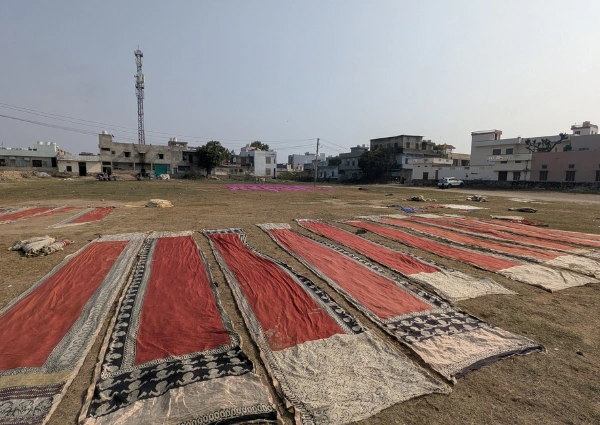
Our restless travelers—often weary from checking boxes off bustling tourist itineraries—find profound peace observing the organic process of traditional hand block printing. Wandering through the village, you will see yards of newly printed block print cloth unfurled in the sunshine, looking like vibrant, kaleidoscopic rivers of earth, indigo, and madder root.
The Carvers and the Cloth: How the Magic is Made
To understand the spirit of this art, one must appreciate the intense labor woven into its creation. The journey begins with the hand block printing blocks—intricately hand-carved from seasoned teak wood. Creating a single printmaking block takes days of agonizing precision, rendering delicate botanical and geometric motifs that mirror the Rajasthani flora.
Choosing the proper fabric for block printing is an equally revered tradition. Soft, organic cotton is rigorously washed and prepped in natural mordants to allow it to receive the earthy pigments. Once prepared, the actual art of block printing on fabric begins.
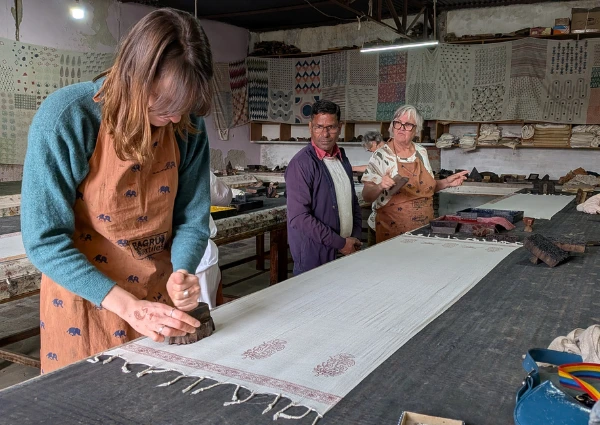
For the mindful traveler, watching an artisan at work is spellbinding. They align the wooden blocks by sheer instinct and muscle memory, striking the block with the heel of the hand to transfer the dye. It is executed with such delicacy and layered complexity that the final result often resembles an elaborate, continuous piece of block painting on fabric.
Mud, Indigo, and Mastery: Distinct Printing Traditions
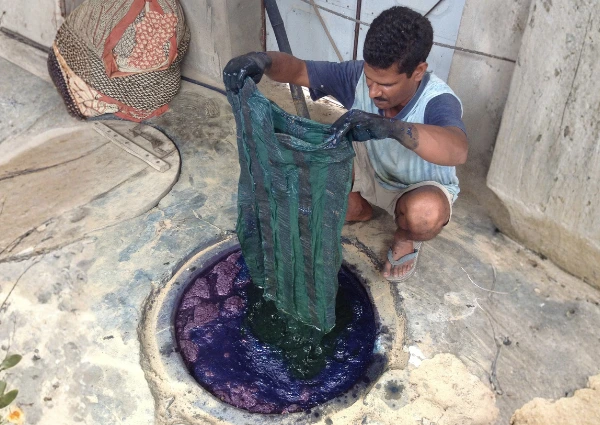
Bagru is profoundly famous for its own namesake Bagru prints, recognized primarily by their deep, dark earth-toned backgrounds and naturally derived pigments. During a visit, you will likely encounter the magical technique of Dabu printing—a mud-resist printing process where a special mixture of clay and tree gum is stamped onto the fabric to prevent dye from reaching certain areas, creating magnificent, starry patterns when finally dipped in natural indigo vats.
If your textile curiosity runs deep, conversing with the local artisans might also touch upon the related wonders of Ajrak printing (or Ajrakh printing). While originating further west in the sub-continent, you will notice echoes of its geometric, multi-stepped genius interwoven with Bagru’s storytelling, showing how fluidly artistry traveled across desert trading routes long before modern borders were drawn.
Creating Your Own Tapestry
For those wishing to connect completely with this heritage craft, Bagru is not merely a place to observe—it is a place to participate. There are a number of grassroots workshops where you can sink your own hands into the dyes and stamp a length of hand block printing fabric. Under the gentle tutelage of master craftsmen, you can choose your motifs, learn the correct pressure needed for block printing for fabric, and discover firsthand how much soul goes into creating authentic block print textiles.
A Few Thoughts for the Mindful Visit:
- Embrace the Mess: Wearing comfortable, simple clothing that you don’t mind getting a tiny splash of natural dye on is best!
- Support the Source: When purchasing, buying directly from the artisan’s workshop directly sustains the livelihood of a community keeping block printing alive against the threat of cheap imitations.
- The Gentle Pace: Just let our staff at Savista know you’d like to visit, and we can gladly arrange a reliable, peaceful ride for you. The journey to Bagru takes under an hour from our gates.
Returning to our quiet 12-acre retreat after a morning in Bagru brings its own special kind of joy. Many a time, guests lay their freshly acquired lengths of printed cotton on their verandas, tracing the imperfect, beautiful motifs as the sun dips below the Aravalli hills. Sharing these tactile treasures with each other over an unhurried, farm-to-table dinner—where laughter meets the silent history held in the very weave of a cloth—is precisely what makes traveling the “Savista way” so enriching for the soul.