
Hatha vs. Vinyasa—Which Traditional Practice is Right for Your Retreat?
Here at Savista, dawn arrives like a slow exhale. Long before the city stirs, our twelve-acre estate awakens to a delicate, unhurried symphony—the gentle cooing of doves, the rustling of the Khejri leaves catching the first morning breeze, and the quiet footfalls of our free-roaming goatsies as they set out for the day. For the weary traveler arriving from across oceans and concrete jungles, stepping into this rural quietude is the first, vital phase of their retreat. It is a stepping down, a deceleration into the deeper rhythms of nature.
For decades, modern wanderers have come to India searching for spiritual re-centering, often hoping to roll out their yoga mats upon ancient soil. Yet, when our guests settle into the peaceful shade of our pavilions and look toward their own yoga practice, we frequently find ourselves engaging in a lovely conversation over cups of lemongrass tea: “We want to practice, but which path is right for us—Hatha or Vinyasa?”
At its core, a yoga practice is an inward journey aimed at finding the elusive bindu—that beautiful, singular point of absolute stillness amidst a chaotic world. If you are preparing to unroll your mat under the canopy of our trees, here is our mindful reflection on the traditional branches of Hatha and Vinyasa, to help you discover what your body truly craves.
Hatha Yoga: The Path of Stillness and Soil
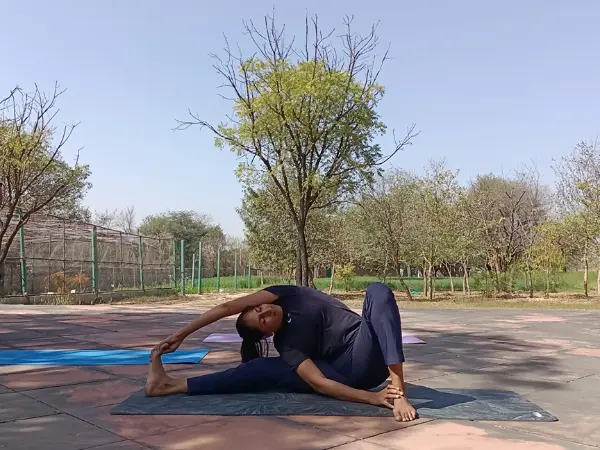
When you practice yoga in a fast-paced modern studio back home, it can often feel like just another workout—another box to quickly check on a bustling to-do list. Hatha yoga stands as the antidote to this modern affliction. The Sanskrit word beautifully translates to sun (ha) and moon (tha), seeking to bring opposing life energies into balance.
Practicing Hatha on an estate retreat means embracing the profound luxury of slowness. The pacing here is deliberate, asking you to move mindfully into a pose (an asana) and simply remain there. In the quiet of a Hatha session, you are granted permission to stop striving. As you hold a seated twist or plant your feet firmly into the ground in a mountain pose, you have the time to investigate the minute details of your physical and emotional terrain.
We always suggest a slow-paced Hatha practice for the utterly depleted traveler. If you have arrived with your nervous system vibrating with the anxiety of boardrooms, airport lounges, and frantic schedules—if your spirit feels entirely untethered—Hatha serves as an anchor. It teaches us the same quiet resilience of our old banyan trees, sending roots deep down into the restorative earth.
Vinyasa Yoga: The River of Breath
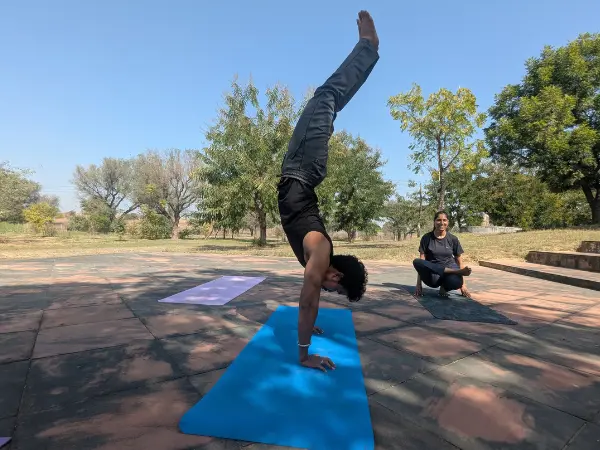
If Hatha is the quiet strength of the ancient tree, then Vinyasa is the flowing river of the monsoon. Vinyasa literally translates to “placing in a special way,” though most modern practitioners beautifully refer to it simply as “Flow.”
In a traditional Vinyasa practice, stillness takes a backseat to rhythm. Movement is intrinsically tethered to the breath—every inhale expands you into a posture; every exhale guides you into the next. There is a magnificent, uninterrupted fluidity to the sequence. When performed consciously, a slow Vinyasa flow transcends mere exercise, morphing into a profound moving meditation. The continuous cadence of the practice helps entirely quiet the “monkey mind,” as you are far too occupied with the present breath to worry about yesterday or tomorrow.
Who among our guests benefits most from this river of breath? The traveler seeking renewed energy and a sense of movement. When the mind and body are ready for a change of rhythm, Vinyasa offers a graceful path from stillness into flow. A fluid Vinyasa session gently coaxes dormant energy out of the joints, unblocks emotional stagnation, and leaves you feeling wrung out—cleansed, buoyant, and deeply refreshed.
Honoring What the Body Whispers
Perhaps the most magical aspect of practicing at a mindful retreat is the radical freedom to change your mind day by day. True luxury, in our eyes, is not being forced onto a rigid, unforgiving schedule.
There are mornings here at Savista when you may awaken full of vibrant, restless energy; those mornings beautifully lend themselves to a dynamic, breath-led Vinyasa on our sun-warmed terraces, ending with a sweat-drenched, glorious rest. Conversely, on days where the slow afternoon heat settles upon the courtyard and the heart yearns for comforting stillness, a grounded Hatha practice stretching deep into the connective tissues might be the perfect balm for the soul.
Both rivers eventually meet the same ocean.
When practice ends, we find the best tradition to follow is simple: lingering in Savasana to the natural sounds of the farm, then wandering slowly toward the dining pavilion. Taking those post-practice moments to share a meal woven entirely from the seasonal, chemical-free harvests of the land is exactly where the practice of yoga integrates with daily living.
When you allow the frantic noise to dissipate, tuning into which rhythm your spirit requires is a quiet triumph—and an exquisite start to any retreat.