
Why Monsoon is Rajasthan's Best Kept Secret And Where to Stay
Introduction
Ask most people when they plan to visit Rajasthan, and they will say October. Or February. Or ‘not in summer, obviously.’ Almost nobody says July.
And that is precisely why July and the entire monsoon season through September is the best time to go.
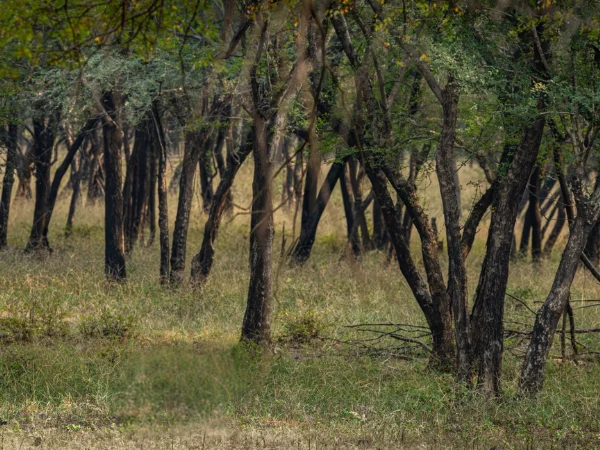
The crowds thin. The prices soften. The heat that defined the state just weeks earlier evaporates overnight, replaced by cool mornings and dramatic skies. The desert turns green. Peacocks, which spend most of the year lurking in the background, suddenly own every field, road, and rooftop. And a place that is extraordinary in winter becomes, in the monsoon, something else entirely slower, lusher, and more honest about what it actually is.
This is Rajasthan’s best-kept secret. And if you are travelling from Delhi, Gujarat, or anywhere within a few hours of Jaipur, the monsoon season is not a time to avoid. It is the only time to come.
“The desert turns green. The crowds disappear. The peacocks come out. And a place that is extraordinary in winter becomes, in the monsoon, something else entirely.”
What Actually Changes in Rajasthan During Monsoon
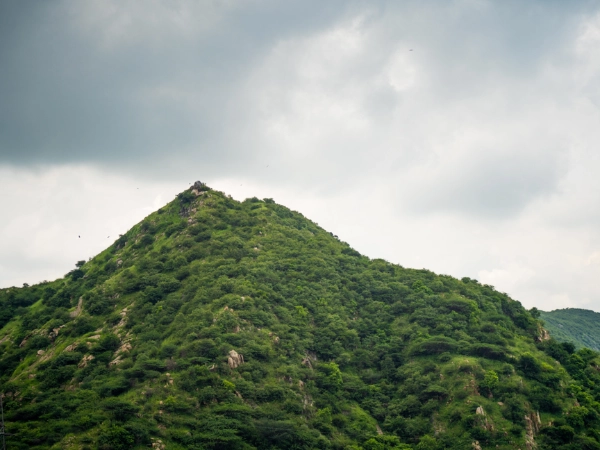
The popular image of Rajasthan dry, golden, fortress-topped is real. But it is a seasonal truth, not a permanent one. Between July and September, the state transforms in ways that most Indians who visit it in winter simply never see.
The colour shifts completely
The landscape that spent six months in shades of ochre and sandstone goes green in the space of a week. Fields of bajra and jowar emerge from soil that looked baked and barren in April. Neem trees, already among the most beautiful in India, become something almost theatrical after rain. Village ponds dry all summer fill up and become gathering points for birds, cattle, and children at the same time.
The heat breaks properly
Rajasthan’s summer is extreme. Jaipur regularly crosses 45°C in May. By the time the monsoon arrives in early July, the contrast is visceral. Temperatures drop to the mid-20s at night. The air that particular kind of rain-washed air that has no equivalent in any other season returns. Mornings are cool enough for open windows. Evenings are the best they will be all year.
The property experience changes for the better
A heritage property in Rajasthan in winter is beautiful. The same property in monsoon is alive. Courtyards that echo with footsteps in January are surrounded by wet grass and the sound of rain on sandstone in July. The food changes with the season. Everything tastes like it just came from the ground, because it did.
You have the place to yourself
India’s outbound travel season for international visitors runs October to March. The domestic rush for Jaisalmer, Jodhpur, and Udaipur especially mirrors this. July and August are the quietest months for tourism in the state. For travellers who find crowds exhausting, and who prefer a property that feels genuinely private, this is the season.
The Case Against the 'Off-Season' Label
The hospitality industry invented the term ‘off-season’ for its own reasons. It means fewer bookings, so it becomes a justification for lower prices and less effort. For the traveller, ‘off-season’ has come to mean: not worth going.
This is, in Rajasthan’s case, simply wrong.
The ‘off-season’ label was applied by operators whose business model depends on international tourists and large group itineraries. Heritage properties, organic farms, and boutique retreats, the kind of places that serve a different kind of traveller, are often better in July than in January. They are fully staffed. The food is better because the farm is producing. The staff-to-guest ratio improves because there are fewer guests. And the property itself when it is not overwhelmed by footfall reveals the version of itself it was actually designed to be.
“The off-season label was invented for the wrong kind of travel. If you are coming for the property, the food, and the quiet July is not off-season. It is the season.”
Where to Stay: What to Look for in a Monsoon Property
Not every Rajasthan property works in the monsoon. A city hotel in Jaipur loses very little to the season. A sprawling fort or countryside property that depends on dusty exterior terraces for its drama becomes a different proposition in heavy rain.
The properties that genuinely thrive in monsoon share a few specific qualities:
- Covered or sheltered common spaces courtyards with arcades, verandahs, indoor dining so that rain becomes atmosphere rather than inconvenience
- Working farms or gardens, which are at their greenest
- Rooms that are set within heritage architecture
- An activity programme that works regardless of weather: cooking classes, some craft activities, yoga, rather than one dependent entirely on outdoor excursions
- A small, intimate scale a property with 10 to 15 rooms means genuine hospitality; a large resort with 200 rooms means COVID-era staffing and buffet breakfast
Savista Retreat: The Monsoon Property Near Jaipur
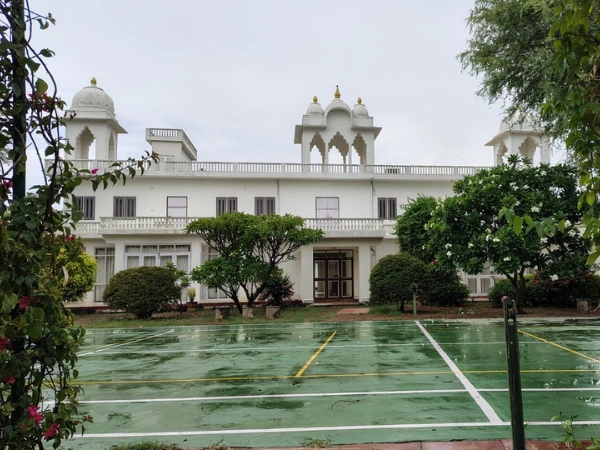
Savista Retreat sits in the midst of a farm 40 minutes from Jaipur on Ajmer Road. The property is built around a 150-year-old Rajput haveli, and has been running as a retreat for travellers who want something more considered than a standard hotel experience.
In monsoon, it is at its most compelling.
The farm is fully alive
Savista’s organic farm produces a significant portion of what guests eat. In July, farm activity for the season begins after the long dry summer. The countryside walk, which is available daily, becomes a different experience in monsoon: green, wet, and genuinely educational about what Rajasthan actually grows and eats.
The haveli was built for this weather
The Rajput haveli was designed before air conditioning existed. Its architects understood Rajasthan’s climate across all seasons which means thick walls, honeycomb-bricked and stone roofs held together by hand-ground mortar, shaded courtyards, and rooms that are cool and quiet even when the rain is heavy. The building is, in monsoon, exactly what it was designed to be.
The experience programme holds up in any weather
Cooking classes, yoga at sunrise, private farm-to-table dinners none of these depend on sunshine. Savista’s activity programme was built around depth of experience rather than outdoor spectacle, which means the monsoon changes the backdrop but not the quality of what you do.
Thirteen rooms only
Savista has a maximum of 13 rooms. In July and August, when occupancy is lower than peak season, the ratio of staff to guests approaches something that resembles private hosting rather than hotel service. It is, in the most straightforward sense, a better time to visit.
Getting There from Delhi and Gujarat
From Delhi / NCR
Jaipur is 280 kilometres from Delhi approximately 4.5 to 5 hours by road (NH48 / NH248A), or 40 minutes by flight. From Jaipur, Savista is a further 40 minutes by car on Ajmer Road. Total door-to-door journey from central Delhi: 6 hours by road, or under 2 hours by air and transfer. Entirely manageable as a Friday evening departure.
From Gujarat (Ahmedabad / Surat / Vadodara)
Ahmedabad to Jaipur is approximately 650 kilometres, a 9-hour drive or a 1.5-hour flight. From Surat and Vadodara, the distances are comparable. For a 2-night stay, a Friday flight and Sunday return is the standard format. Savista offers transfers from Jaipur airport and can arrange pickup from city hotels.
When to Book
The monsoon search window when travellers from Delhi, Gujarat, and Rajasthan begin looking for weekend escapes peaks in late June and early July. Properties that carry genuine monsoon credentials (working farms, heritage architecture, activity programmes) fill well ahead of the season among travellers who know what they are looking for.
For Independence Day weekend (14-16 August) specifically, availability at boutique properties in Rajasthan fills by mid-July at the latest.
Stay at Savista This Monsoon
2 nights from [TBD] per couple all meals, yoga, farm walk, and activities included.
WhatsApp: +91 6377964564 | info@savista.com | savista.com
Maximum 13 rooms. Monsoon availability is limited.