
Bhaskara
Incidentally, Bhaskara was the name of a 7th century Indian mathematician who is believed to have been the first to write numbers in the Hindu-Arabic decimal system with a circle for the zero, and who gave a unique and remarkable rational approximation of the sine function.
The sun is fundamental to the existence of life on the planet, and the Hindu ancients not only understood this but also expressed it through poetry, philosophy, ritual, and the body. The sun in Hindu philosophy is the symbol of consciousness, awareness, illumination and enlightenment. The most fundamental Hindu mantra – the Gayatri mantra – likens wisdom and illumination to the sun; it is a non-sectarian prayer asking for the mind to be illumined with wisdom, to shine like the sun. The recitation of slokas (short poetic compositions) in Sanskrit in the early morning, face raised towards the rising sun in an attitude of thanksgiving or salutation to the sun, has always been part of everyday life in India. Similarly the sequence of yoga postures (asanas) known as Suryanamaskar or sun salutation is integral to the practice of yoga.
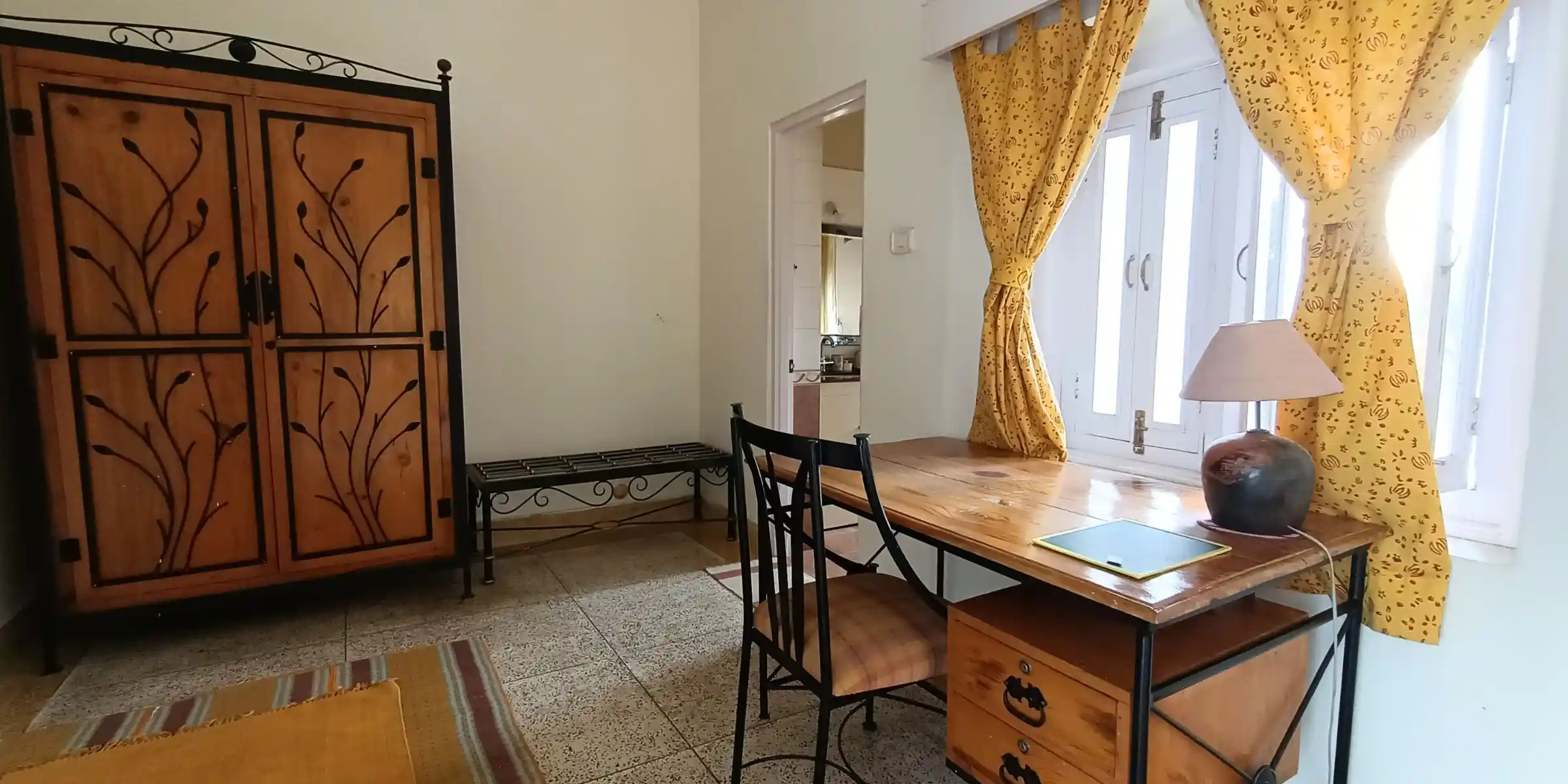
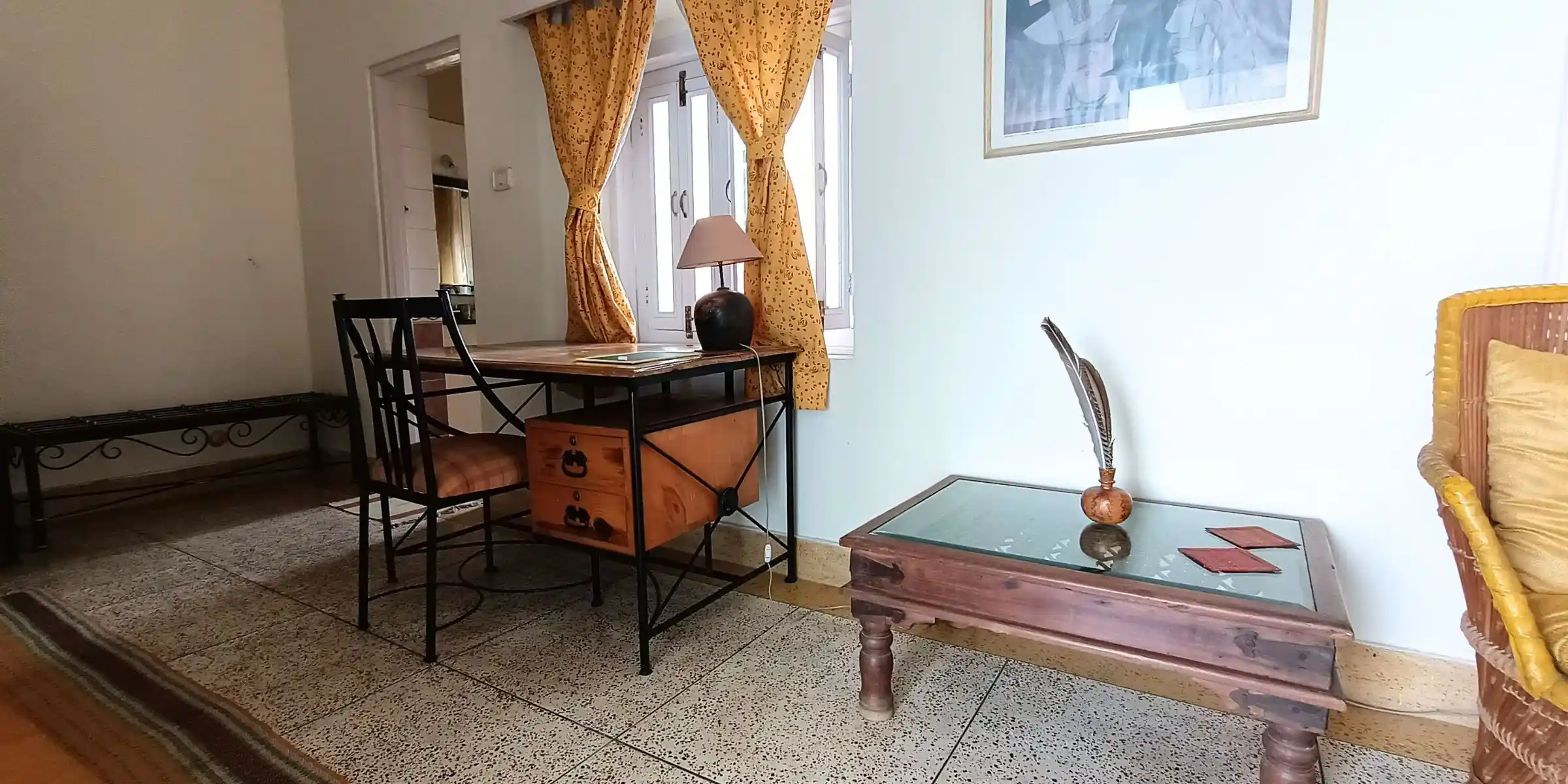
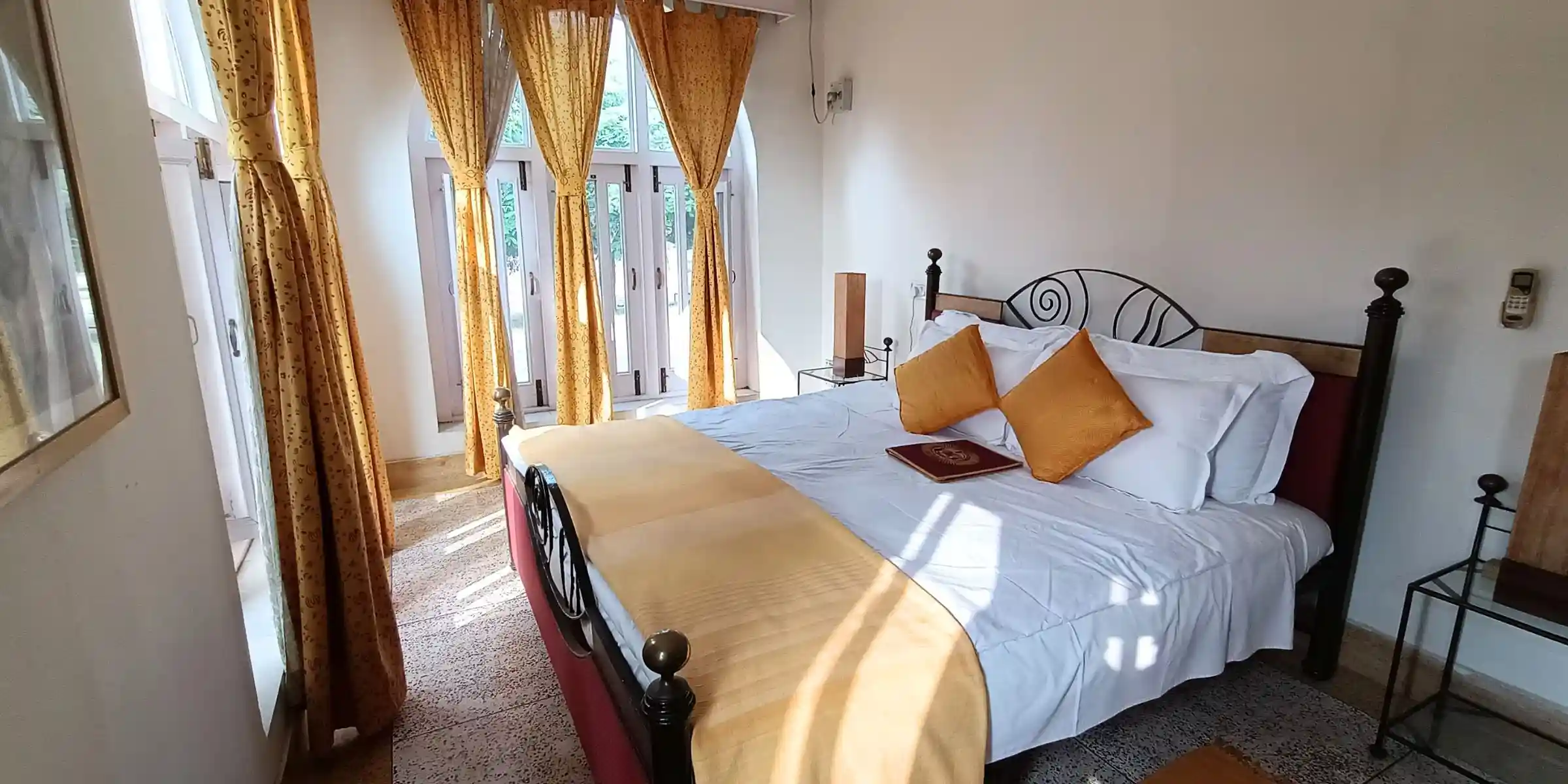
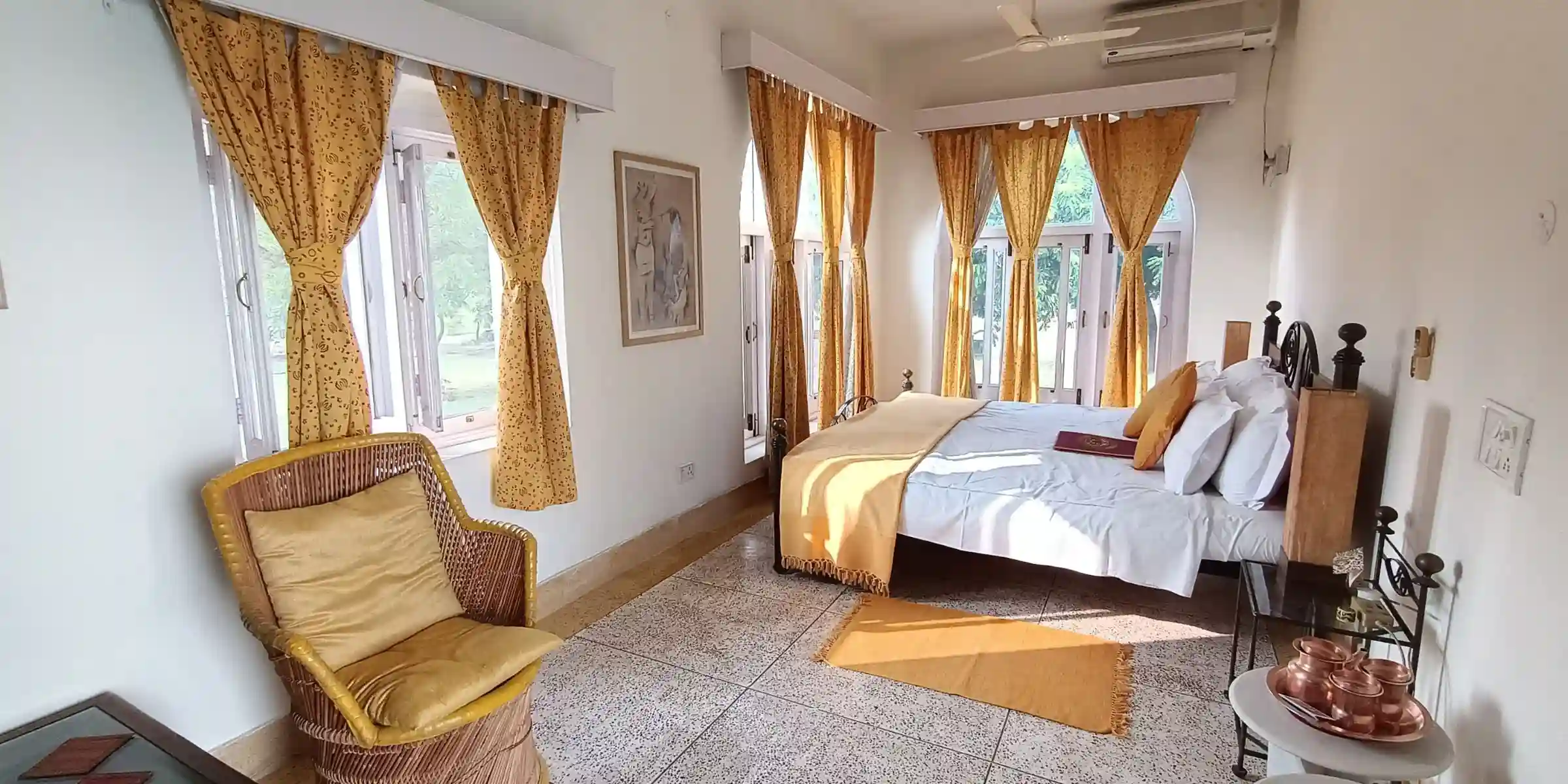
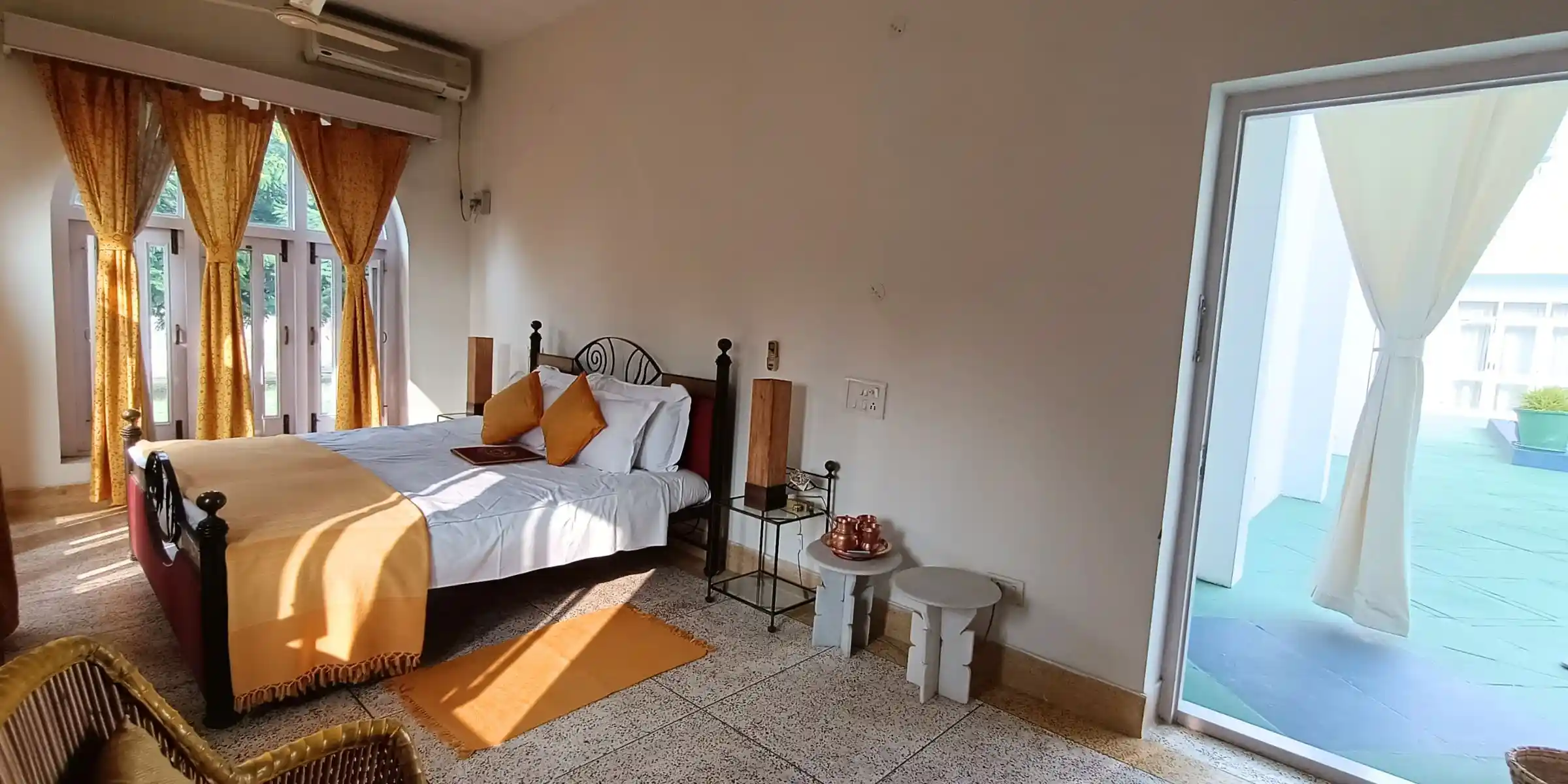
The colours in this room – soft furnishings in golden yellow occasionally tinged with red – are Savista’s small way of paying homage to the sun. It is a spacious tubular room with a modern décor – a wrought iron king bed and matched armoire and writing desk in golden-yellow tinged teak. The room has large French windows across two walls, opening out into a grove of shady Neem (margosa) trees. The balcony outside the door leads to the courtyard and the pool. Since the room is situated in the north-west corner of the haveli, it faces both east and west and has the sun pouring into it both in the mornings and evenings. It is probably the only guest room in the haveli where, standing in the doorway, you can watch both sunrise and moonrise.
The silver-white sheer curtains woven by the weavers of Benaras (Varanasi) acknowledge the inseparability of the moon from the sun and from life on the planet. It reminds us of the moon’s impact on the water of the planet – another vital source of life – and on the water in our bodies and on the growth cycle of plants, among others. It is the traditional lunar calendar that even today governs everyday spiritual/religious life in many parts of India, and almost all important auspicious days and festivals are linked to the full or new moon. The third evening of the waxing moon – trittiya (Sanskrit), moondram pirai (Tamil) – is believed to be the most beautiful crescent moon of the month, and lovers holding hands and gazing on this celestial beauty are believed to imbibe the power and blessings of the moon to strengthen their love.
- Complimentary breakfast;
- Tea / Coffee making facility;
- Pure, natural drinking water from Savista’s borewells (complimentary bottled water on request);
- Complimentary nibbles;
- Free wireless internet;
- Air conditioning;
- Space heating in chilly weather;
- Sumptuous duvet and high quality cotton bed linen;
- Hundred percent cotton towels, robes and room slippers;
- Branded herbal bath products.
- Business services (scanning, copying, printing);
- Laundry and ironing*;
- Hair dryer;
- Concierge service;
- Maps and travel guides;
- Medicines, germicide gargle, sewing accessories etc. (an “Ask For” menu is placed in each room. If you require some other service that is not listed, please ask and we will try our best to arrange it for you);
- Doctor/dentist appointments and facilitation;
- For guests with physical disabilities, one room can be outfitted to suit their needs. Please let us know when booking.
(* chargeable)
Savista is a disability-friendly place. Please tell us if you have any physical disabilities and we will arrange your room and other services accordingly.
- One child is allowed per room.
- No additional charges for child below 4 years old.
- For child above 4 years Extra charge of INR. 2500/- will be added (rollaway bed will be provided).

Query Form